Core Recitation TrackAll Ages
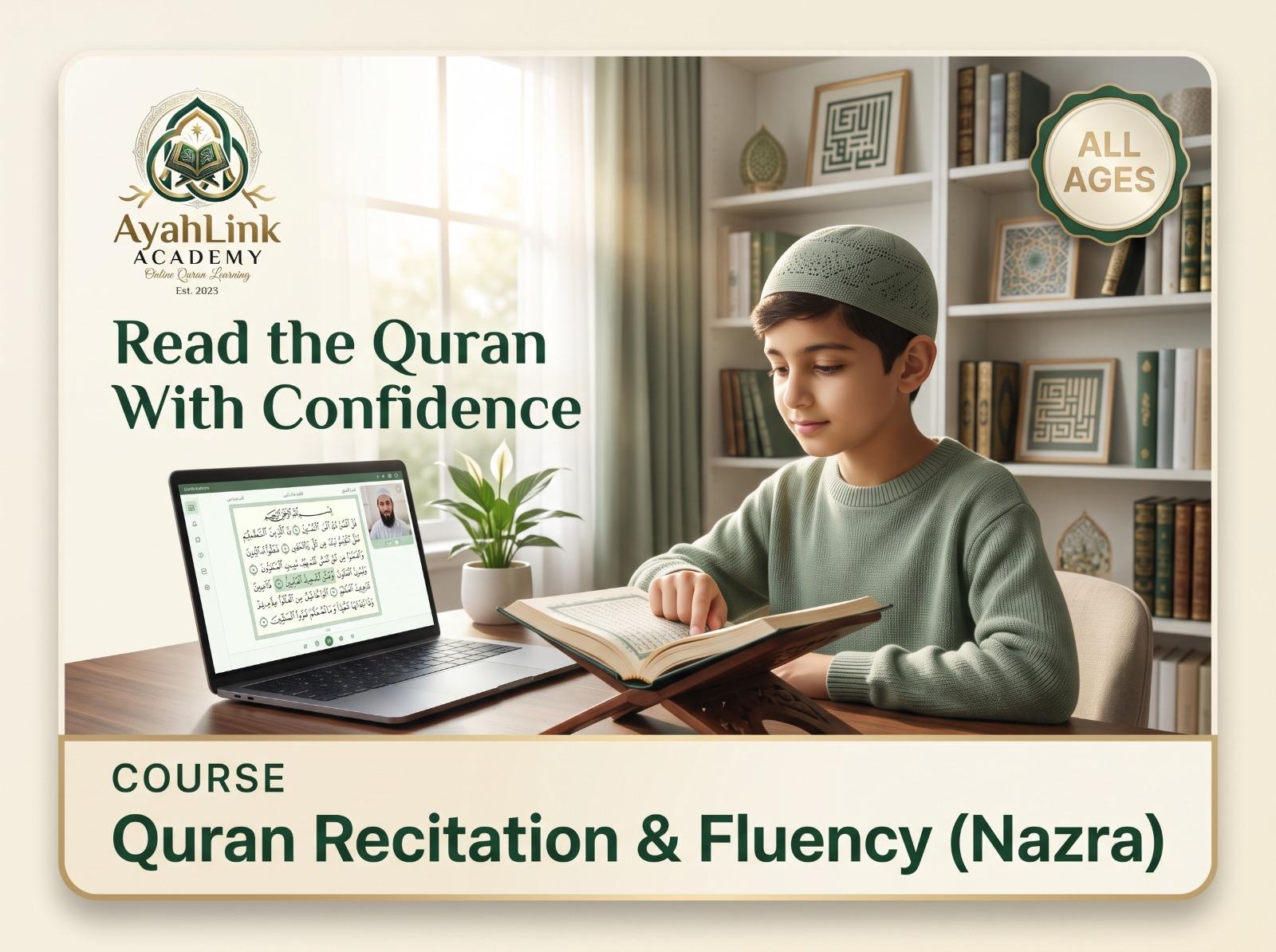
Quran Recitation & Fluency (Nazra)
Enhance reading fluency with continuous applied Tajweed, proper stops (Waqf), and melodic rhythm.
Foundation Track (Ages 4+)
Noorani Qaida is where every Quran journey begins — the Arabic letters, their sounds and the joining rules a child must master before reading the Quran itself. At AyahLink Academy, children learn Noorani Qaida one-to-one and live, with games and encouragement in every lesson, never by rote alone.

No prior Arabic knowledge required. Suitable for complete beginners and young children.
Recognition of individual Arabic letters, joining shapes (beginning, middle, end), and correct vocal Makharij (throat & lip points).
Mastering Fatha, Kasra, Dammah, and double vowels (Tanween) with accurate rhythm and no stretching.
Understanding long vowel lengthening (Madd Asli), soft letters (Leen), and resting silent letters (Sukoon).
Emphasized letters (Shaddah), basic Ghunna nasalization, and final oral evaluation by Qaria Aimen.
Children learn through short games, repetition and praise, matched with a patient teacher who corrects every sound gently. Adult beginners move at a faster, more analytical pace, focusing on accuracy and confidence. Either way, the pace is set by the student — never by a group.
Every Qaida lesson follows a lively structure children love: a short warm-up game, the new letters taught on a shared screen, a practice game that makes the sounds stick, and a star challenge to finish. Your child is answering, playing and reading aloud from the first minute — not sitting silently repeating. Parents receive a short progress note, so you always know which letters your child has mastered and what comes next.
A strong Qaida foundation makes everything after it easier — Nazra, Tajweed and memorisation all build on these letters. Start your child's Noorani Qaida journey with three free trial classes: meet the teacher, see our interactive method, and watch your child fall in love with the Arabic alphabet from the very first lesson.
Common questions
The free trial, what $50 covers, who teaches, and how scheduling works. If yours is not here, message us — we answer on WhatsApp.
Most children start at 4 or 5, as soon as they can sit for a short lesson and enjoy copying sounds. There is no upper age limit — older beginners and adults start here too, and simply move faster.
With three classes a week, most young children finish the Qaida in about 4 to 6 months. Your teacher confirms the pace after the free trial classes and reports progress to you every month.
Yes. Every new student gets 3 free trial classes with a real teacher — no card and no obligation. You only pay if you decide to continue afterwards.
A flat $50/month for three one-to-one classes a week, with the same teacher every time. Parents receive a monthly progress report, and siblings get 20% and 30% off.
Still have a question?
Ask us on WhatsAppEnhance reading fluency with continuous applied Tajweed, proper stops (Waqf), and melodic rhythm.
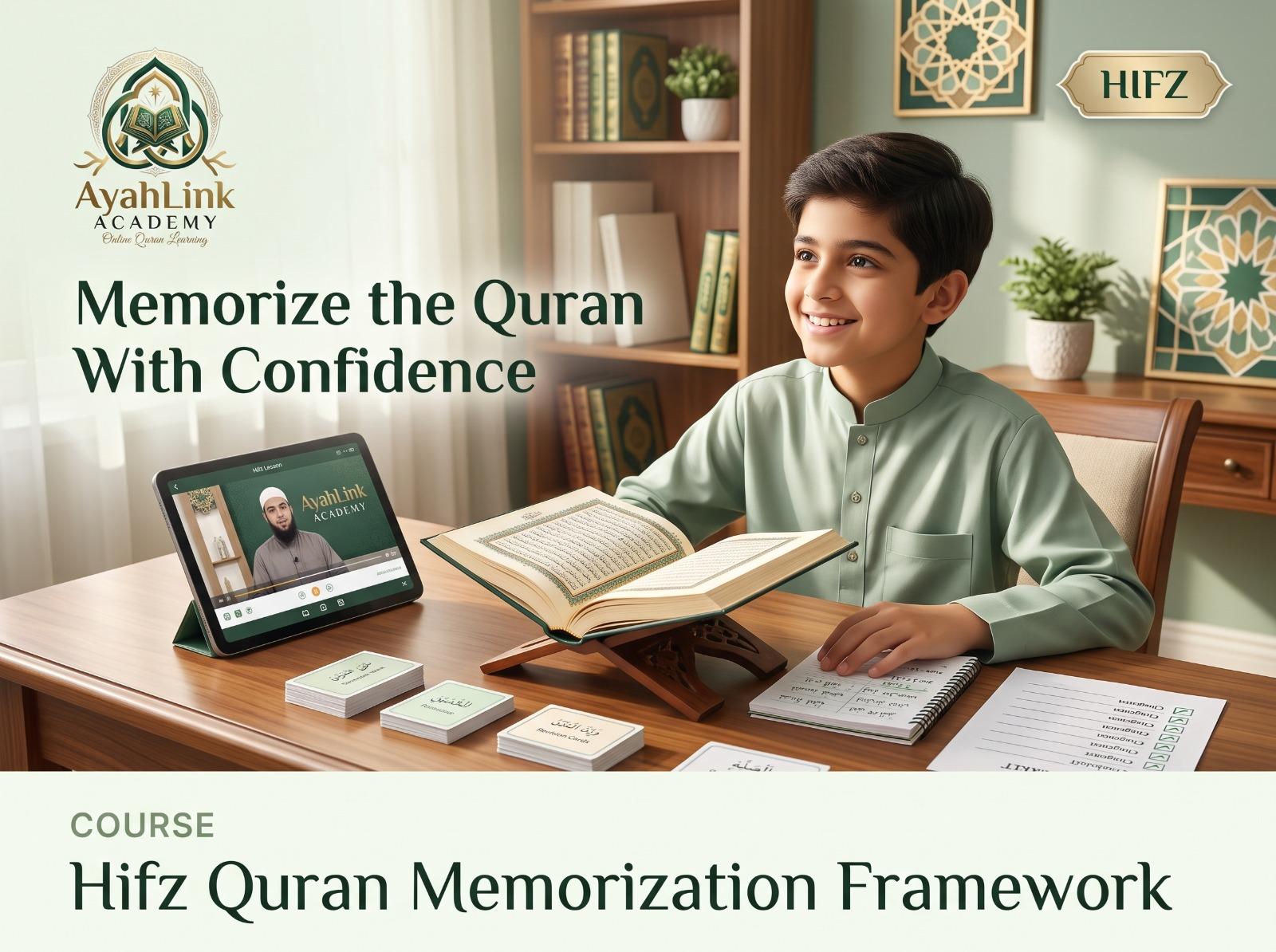
Systematic 3-tier memorization method (Sabaq, Sabqi, Manzil) supervised by Hafiz Usman.

Master exact Makharij (articulation points), Sifat (letter qualities), and intricate rules of Quranic recitation.